
The Formula Book 方剂
补中益气汤 bǔ zhōng yì qì tāng
Tonify the Middle and Augment the Qi Decoction · from Pi Wei Lun, 1249
“Written during a siege, for the exhausted. When everything in a person sags — energy, appetite, organs, morale — this is the formula that lifts.” — Lao Xinglin
What's in the pot
| Herb | Role | Classical amount |
|---|---|---|
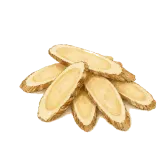 黄芪 huáng qí 黄芪 huáng qí |
Chief — tonifies qi and raises the sunken yang | 15 g |
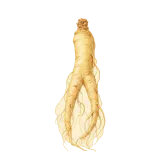 人参 rén shēn 人参 rén shēn |
Deputy — reinforces the source qi | 9 g |
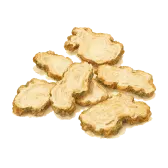 白术 bái zhú 白术 bái zhú |
Deputy — strengthens the spleen | 9 g |
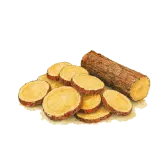 炙甘草 zhì gān cǎo 炙甘草 zhì gān cǎo |
Deputy — tonifies and harmonizes | 6 g |
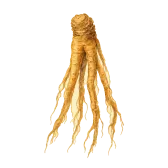 当归 dāng guī 当归 dāng guī |
Assistant — nourishes the blood the qi rides on | 6 g |
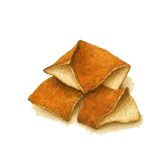 陈皮 chén pí 陈皮 chén pí |
Assistant — keeps the tonics moving | 6 g |
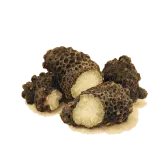 升麻 shēng má 升麻 shēng má |
Envoy — raises the clear yang | 3 g |
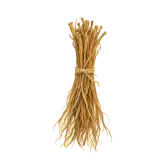 柴胡 chái hú 柴胡 chái hú |
Envoy — lifts and raises with sheng ma | 3 g |
The pattern it treats
Li Dongyuan practiced through war, famine, and epidemic, and concluded that the illnesses around him began in ruined digestion — the "middle burner" ground down by stress and privation. His masterpiece treats qi sinking: exhaustion that worsens with exertion, appetite gone, a low fever the tradition read as deficiency-heat, and — most literally — things drooping that should hold: organ prolapse, sagging chronic diarrhea, heavy limbs[1]. Eight centuries later the picture reads as burnout, and the formula remains East Asia's answer to it.
How the team works
A qi-tonic core you'll recognize — huang qi leading ren shen, bai zhu, and honey-fried licorice — plus dang gui for the blood and chen pi to keep it all moving. The signature is the two tiny envoys: sheng ma and chai hu, a few grams each, said to raise the rebuilt qi like poles lifting a tent[1]. Tonify, then lift — the design is in the name.
What the research says
Widely prescribed and much studied in East Asia — fatigue, prolapse support, post-operative recovery — but through small trials that don't yet add up to an established claim. The honest file: traditional confidence, modern evidence pending.
Where to be careful
A warm, lifting formula: wrong for heat patterns, high fever of excess, or yin deficiency's night-sweating heat[1]. The ginseng and licorice cautions travel with the team, as always.
References
- Scheid, Bensky, Ellis & Barolet, Chinese Herbal Medicine: Formulas & Strategies, 2nd ed., Eastland Press, 2009. ↩
 Reviewed 2026-08-25