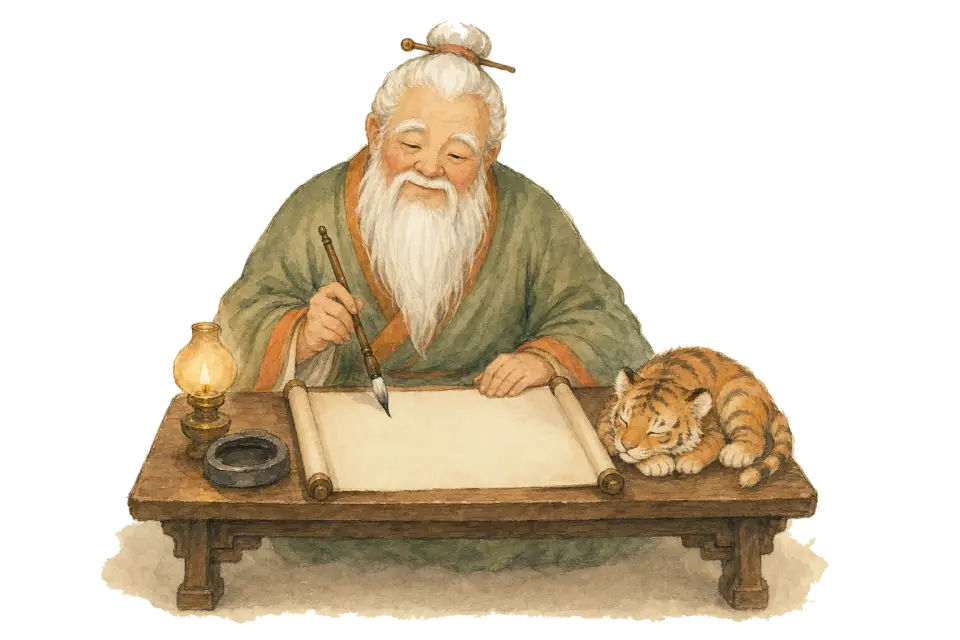
About the Grove 杏林
“People ask why the grove is free. I tell them I was paid long ago — five trees at a time.” — Lao Xinglin
The legend
In the third century, a physician named Dong Feng (董奉) settled at the foot of Mount Lu and did something strange: he refused all payment. Cured of a serious illness, you planted five apricot trees on his hillside; a minor complaint, one tree. Years passed, and a grove of a hundred thousand apricots stood around his house. When the fruit ripened he traded it — a bowl of apricots for a bowl of grain — and the grain went to the poor and to travelers. The stories add that a tiger guarded the grove against those who took more than their share (虎守杏林).
Ever since, "the apricot grove" (杏林) has been how Chinese speaks of medicine practiced generously. To praise a doctor, you say the grove is warm with spring (杏林春暖). Lao Xinglin — "the old fellow of the apricot grove" — is this site's storyteller: a kindly veteran doctor who sorts the herbs, brews the tea, and explains things plainly. He is a character, drawn with affection; behind him sits an editorial process that is entirely serious.
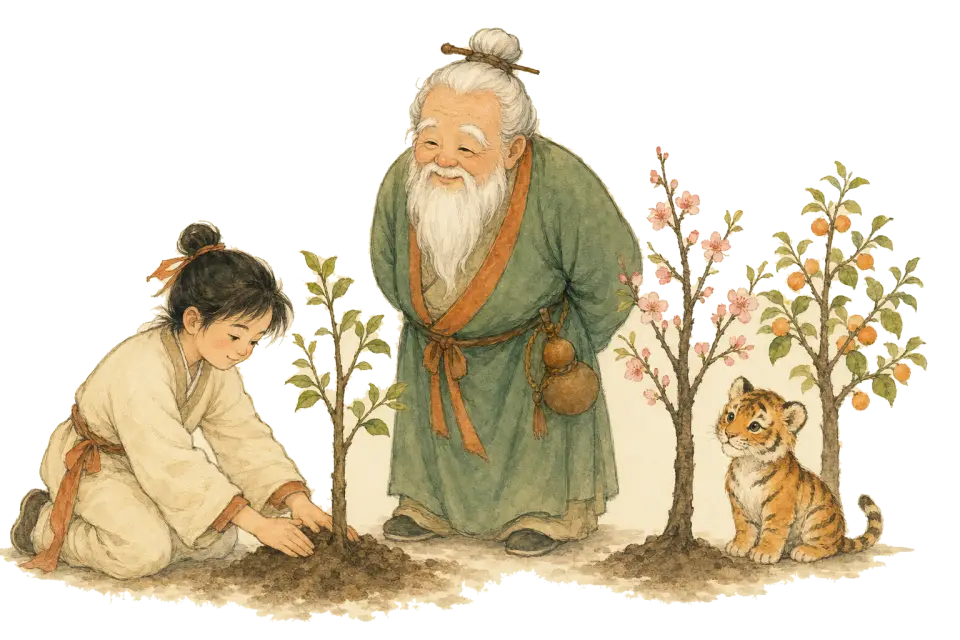
What this site is
Two references growing side by side. The materia medica — plain-language monographs on the herbs, classic formulas, and core concepts of Chinese medicine, with the tradition's claims and the modern evidence kept honestly distinct. The practitioner directory — opening soon — for finding licensed acupuncturists and herbalists near you, starting with California.
The rules every page follows
- Sources shown. Traditional claims cite the standard references; scientific claims cite the actual literature, verified before we cite it — never quoted from memory.
- Tradition and evidence stay labeled. "The tradition says" and "the research says" are different sentences on every page, and we never blur them.
- No cures promised. This is an educational reference, not a clinic and not a shop. Where the evidence is thin, the page says so.
- Safety gets the loud voice. Interactions and cautions are never buried.
The editor
The grove is edited by Michael Alexis. I'm not a doctor or a licensed practitioner — which is exactly why this site runs on rules instead of authority: every claim cites its source, tradition and evidence stay labeled, and corrections get fixed publicly.
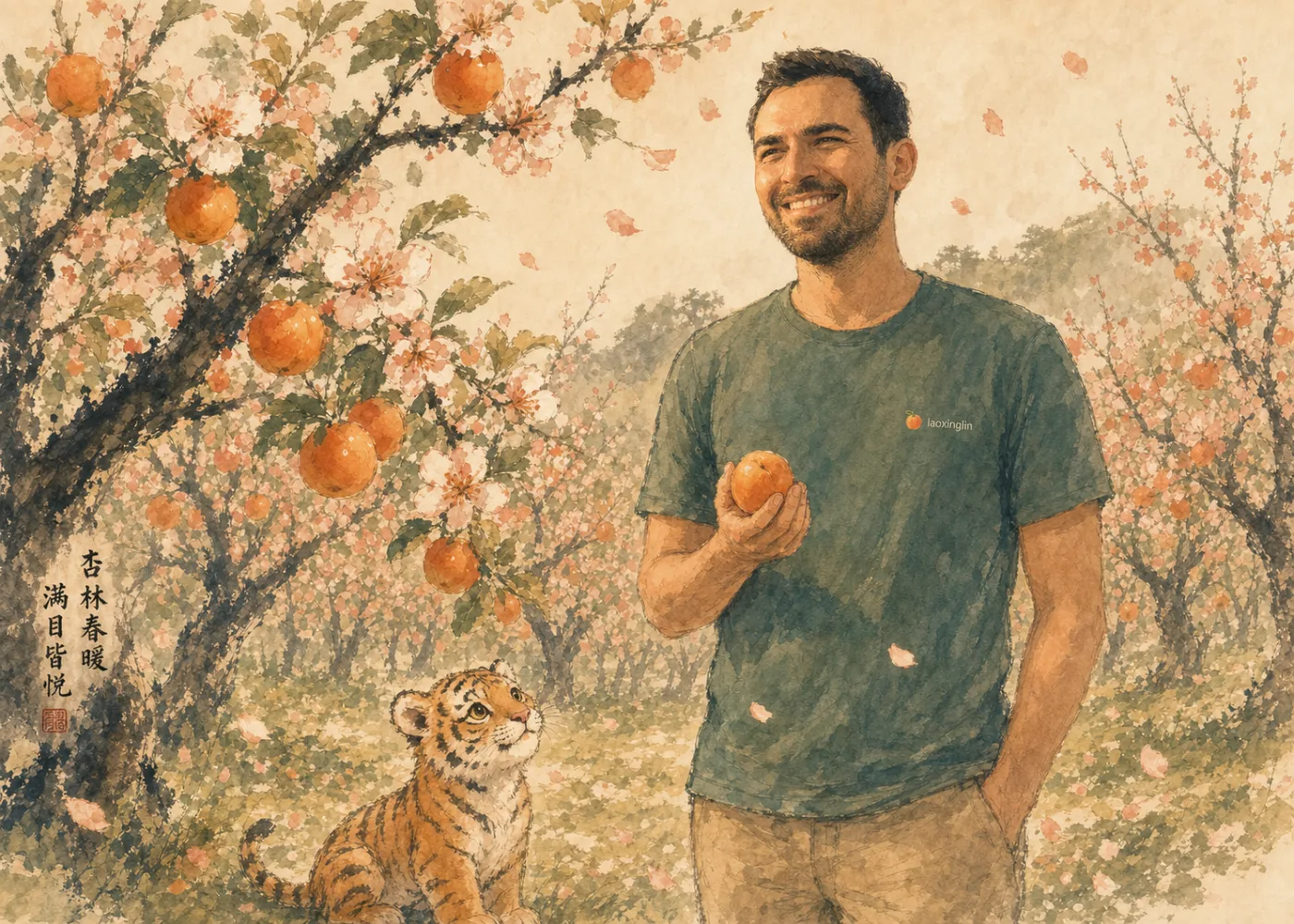
The interest is old, though. In 2014 I began years of deep research into my own health, and it eventually took me to China — many times: clinics, acupuncture tables, massage benches, herb markets, testing firsthand what actually helped. Lao Xinglin is the guide I wished existed then: the tradition explained warmly, with the evidence checked. He knows everything; I just check his footnotes.
Corrections are the mail we value most: contact — if a citation, translation, or botanical detail is wrong, tell me and I will fix it and say so.