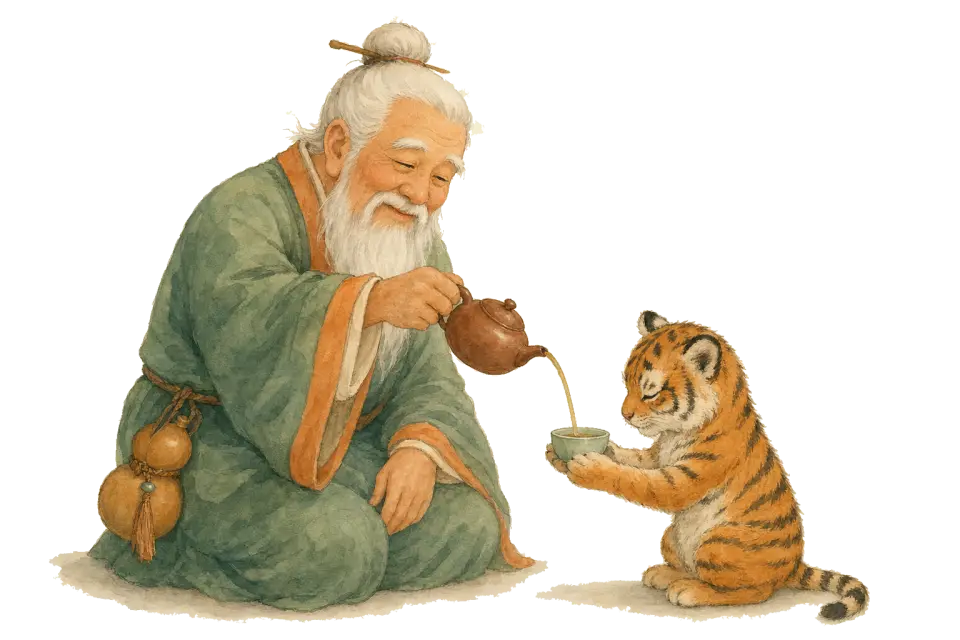
The Teahouse 茶
Every consultation in the grove begins the same way: sit, the tea is still warm. This hall is about what's in the pot — the great Chinese tea families and what the research honestly says about them, the caffeine-free brews the pharmacy lends the kitchen, and the small clay-pot ceremony that turns drinking tea into paying attention.
中国茶
One plant, six teas — the difference is what happens after picking. Ask what tea is healthiest and I will pour you the one you'll actually drink daily. That's the healthiest.
乌龙茶
The half-way tea — stopped between green and black, which is why it tastes like neither and outsells both in my province. The benefits claims need the same halfway honesty.
普洱茶
The only tea that improves with decades — pressed into cakes, aged like wine, and traded like it too. The tradition serves it after heavy meals; the research is still catching up.
安眠茶
After sundown my teahouse changes menus — nothing from the tea plant, everything from the cabinet. These are the cups I actually pour at night, and what each honestly does.
工夫茶
The same word as kung fu — skill earned through practice. A pot the size of your fist, more leaf than seems wise, and steeps counted in breaths. It makes ten minutes feel like an hour off.
茉莉花茶
The tea that is really a courtship — green tea leaves left overnight with jasmine blossoms until they fall in love. The flowers are then removed, which I have always found a little heartless.
菊花茶
The one tea in this house with its own drawer in my cabinet. Golden, caffeine-free, and served to every guest who arrives squinting from the sun — tradition calls it cooling, and I call it lovely.
绿茶
The most studied leaf on earth, and still the most exaggerated. I will tell you what the research actually holds, because a tea this good does not need to lie.
大麦茶
Not a tea at all — roasted barley in hot water, the drink poured free in half the restaurants of East Asia. Toasty, caffeine-free, and so unpretentious it never learned to make health claims.