
The Herb Cabinet 本草
天麻 tiān má
Gastrodia elata · gastrodia tuber
“An orchid with no leaves that lives on a fungus and calms the wind in a spinning head — the strangest biography in my cabinet belongs to its steadiest herb.” — Lao Xinglin
What the tradition says
Tian ma is the cabinet's specialist in internal wind — the tradition's name for symptoms that move like weather inside a still body: dizziness, vertigo, tremor, the throbbing wandering headache, numbness, even the convulsions of childhood fevers in the old texts[1]. "For spinning heads, tian ma" is close to a proverb; the classical nickname was ding feng cao, the "settle-wind grass." Its constant partner is gou teng — tuber and hook, the tradition's standard pairing for wind rising with liver heat, and the pair the headache room points to.
The strange biography
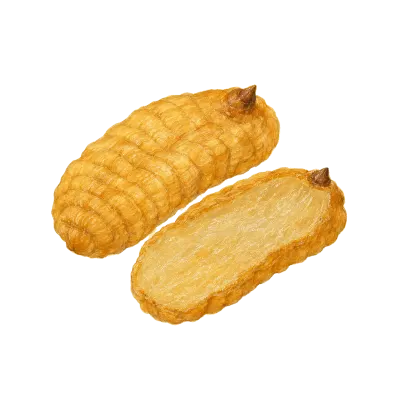
The plant is an orchid that abandoned photosynthesis: no true leaves, no green, just a honey-colored stalk from an underground tuber that survives by digesting a symbiotic fungus. The tuber — amber, glassy when sliced — is the medicine. The old harvesters considered it half-magical; the botanists, having worked out the fungus arrangement, mostly agree.
What the research says
A busy pharmacology file: reviews catalog gastrodin (the tuber's signature compound) with sedative, anticonvulsant, and neuroprotective effects in laboratory and animal studies, and gastrodin injections are used within China for vertigo and headache[2]. Independent, rigorous human trials of the herb itself remain scarce — a familiar sentence in this cabinet, attached here to unusually interesting chemistry.
Where to be careful
A well-tolerated drawer by reputation, with the standard boundaries: dizziness and headache are symptoms first and prescriptions second — sudden severe versions belong in the emergency column, not the teapot; and anyone on sedating or seizure medication should not add gastrodin extracts uninvited[2].
In the pharmacy
Flattened amber tubers with fine growth rings and a parrot-beak bud scar — the classic "pigeon-king" grade — or glassy pale slices for the pot, classically steamed with fish head in the famous dizziness-comfort dish. Counterfeits carved from potato exist; the parrot beak and the rings are the connoisseur's tells.
References
- Bensky, Clavey & Stöger, Chinese Herbal Medicine: Materia Medica, 3rd ed., Eastland Press, 2004. ↩
- "The rhizome of Gastrodia elata Blume — an ethnopharmacological review," Journal of Ethnopharmacology, 2016. https://pubmed.ncbi.nlm.nih.gov/27377337/ ↩
Under the modern lens
Chemists have catalogued some 118 distinct compounds in tiān má. The ones their papers return to most often:
Constituent records from SymMap v2.0 and TCMSP, retrieved August 2026 and checked by hand. A list of what's inside is a map, not a promise — chemistry alone doesn't prove an effect.
 Reviewed 2026-08-26