
The Herb Cabinet 本草
熟地黄 shú dì huáng
Rehmannia glutinosa · prepared rehmannia root
“Nine times steamed, nine times dried, until the root turns black as lacquer and sweet as dates. When the deepest reserves run dry, this is the drawer that refills them.” — Lao Xinglin
What the tradition says
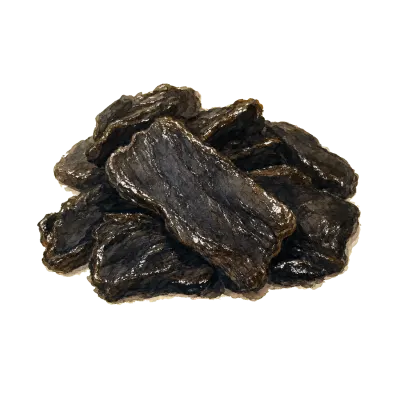
Shu di huang is the pharmacy's deepest well. The raw root (sheng di huang) is a cooling blood herb; steamed with rice wine and dried — classically nine times over — it transforms into something else entirely: black, glossy, sticky-sweet, and profoundly nourishing[1]. The tradition ranks it first among yin and blood tonics: for the pale and dizzy picture of blood deficiency, and for the marrow-level depletion of kidney yin and essence — sore back, weak knees, night sweats, early graying, the body's reserves scraping bottom[1]. It anchors Liu Wei Di Huang Wan as chief and sits at the base of the great blood formula Si Wu Tang.
What the research says
Rehmannia's iridoid glycosides (catalpol chief among them) are studied in laboratories for metabolic and neuroprotective signals — largely in animals, without a clinical evidence base for the traditional indications. Its standing rests on a millennium of formulation practice.
Where to be careful
One famous drawback: it is rich, heavy, and cloying. The tradition withholds it — or buffers it with movers like sha ren or chen pi — wherever digestion is weak or damp: bloating, poor appetite, and loose stools are its stop signs[1]. This is also why Liu Wei Di Huang Wan pairs its three fillers with three drainers.
In the pharmacy
Lacquer-black, pliable slices of Rehmannia glutinosa, sweet enough to chew. Quality shows in the blackness and the shine; the raw yellow-brown root is a different drawer with a different job[1].
References
- Bensky, Clavey & Stöger, Chinese Herbal Medicine: Materia Medica, 3rd ed., Eastland Press, 2004. ↩
Under the modern lens
Chemists have catalogued some 113 distinct compounds in shú dì huáng. The ones their papers return to most often:
Constituent records from SymMap v2.0 and TCMSP, retrieved August 2026 and checked by hand. A list of what's inside is a map, not a promise — chemistry alone doesn't prove an effect.
Used in formulas
- 六味地黄丸 Liu Wei Di Huang Wan Six-Ingredient Rehmannia Pill Chief — deeply nourishes kidney yin and essence
 Reviewed 2026-08-26