
The Herb Cabinet 本草
石斛 shí hú
Dendrobium nobile & spp. · dendrobium stem
“An orchid that grows on rock and sells like jewelry — emperors hoarded it, counterfeiters imitate it, and all it ever claimed to do was put moisture back where illness spent it.” — Lao Xinglin
What the tradition says
Shi hu — "bushel of stone" — is the stem of an orchid that clings to cliffs, and the tradition ranked it among its treasures: the premier restorer of stomach fluids and yin, for the parched mouth and thirst after fever, the dry heaves of a depleted stomach, and the dim eyes and weak back of long decline[1]. The old materia medica listed it in the top grade — the herbs for cultivating life, not just curing disease — which partly explains the imperial prices it still commands.
What the research says
A large laboratory literature and a thin clinical one: reviews catalog its polysaccharides and alkaloids with antioxidant and blood-sugar-related activity in lab and animal work[2] — consistent with the moistening, fluid-restoring folk role, and unproven in people. The price of the fancy grades is set by scarcity and ceremony, not by trial data; this cabinet says so out loud.
Where to be careful
A gentle drawer: avoid mainly in early, hot infections (the tradition worries it "locks the thief indoors") and in cold-damp constitutions that need drying, not moistening[1]. The practical hazard is commercial: shi hu is among the most faked items in the trade — dyed lookalike stems abound. Buy from serious pharmacies or not at all.
In the pharmacy
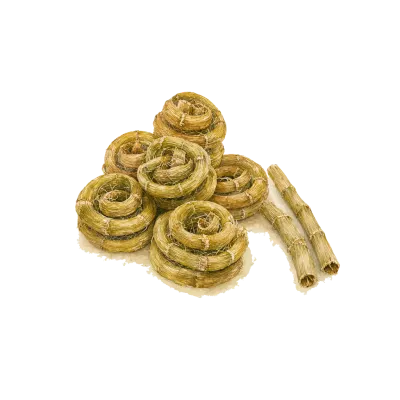
Golden-green jointed stems, often wound while fresh into little springs ("iron-skin maofeng" spirals command the top prices), or sold as feng dou coils for chewing and steeping. In the kitchen it simmers with mai men dong into the classic fluids-restoring drink, or joins Xing Po's lean-pork soups for the recently recovered. The hair-and-skin room mentions its court history — the empresses drank their orchids; the trials remain unrun.
References
- Bensky, Clavey & Stöger, Chinese Herbal Medicine: Materia Medica, 3rd ed., Eastland Press, 2004. ↩
- "Review of research on Dendrobium, a prized folk medicine," Applied Microbiology and Biotechnology, 2012. https://pubmed.ncbi.nlm.nih.gov/22322870/ ↩
Under the modern lens
Chemists have catalogued some 88 distinct compounds in shí hú. The ones their papers return to most often:
Constituent records from SymMap v2.0 and TCMSP, retrieved August 2026 and checked by hand. A list of what's inside is a map, not a promise — chemistry alone doesn't prove an effect.
 Reviewed 2026-08-26