
The Herb Cabinet 本草
酸枣仁 suān zǎo rén
Ziziphus jujuba var. spinosa · sour jujube seed
“The tradition's sleep seed. When the heart is too tired to rest — that particular exhausted sleeplessness — this small kernel is the first thing the old formulas reach for.” — Lao Xinglin
What the tradition says
The cultivated jujube gives its fruit (da zao); the wild, thorny variety gives its seed. Suan zao ren is the tradition's foremost answer to a specific kind of sleeplessness: not the wired insomnia of excess, but the depleted kind — heart and liver blood too thin to anchor the spirit, so the tired mind floats[1]. It nourishes as it calms, which is why it sits in Gui Pi Tang and headlines its own famous prescription, Suan Zao Ren Tang, for "deficiency-taxation vexation" — exhausted and still awake at 3 a.m.[1]. Secondary work: restraining the abnormal sweating of the depleted[1].
What the research says
Widely used across East Asia for sleep, and studied there — saponins (jujubosides) show sedative effects in animal models, and small clinical trials of the seed and of Suan Zao Ren Tang exist — but the trial base is not yet rigorous enough to declare an evidence-based therapy. Filed honestly: promising folk pharmacology, awaiting good trials.
Where to be careful
Gentle, but the tradition notes it is a nourisher, not a sedative for excess-heat insomnia[1] — pattern matters. Anyone on prescription sedatives should treat any calming herb as potentially additive and involve their clinician.
In the pharmacy
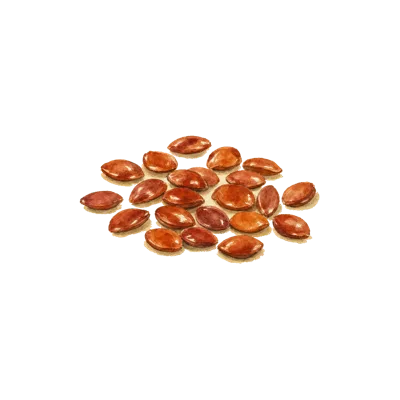
Flat, glossy red-brown seeds, usually dry-fried (chao suan zao ren), which the tradition considers the better calming preparation, and crushed before decocting[1].
References
- Bensky, Clavey & Stöger, Chinese Herbal Medicine: Materia Medica, 3rd ed., Eastland Press, 2004. ↩
Under the modern lens
Chemists have catalogued some 173 distinct compounds in suān zǎo rén. The ones their papers return to most often:
Constituent records from SymMap v2.0 and TCMSP, retrieved August 2026 and checked by hand. A list of what's inside is a map, not a promise — chemistry alone doesn't prove an effect.
Used in formulas
- 归脾汤 Gui Pi Tang Restore the Spleen Decoction Assistant — nourishes the heart, aids sleep
 Reviewed 2026-08-25