
The Herb Cabinet 本草
牛蒡子 niú bàng zǐ
Arctium lappa · burdock fruit
“The burr that sticks to your socks holds seeds the tradition trusts with hot, swollen throats. Nature's velcro, repurposed as medicine.” — Lao Xinglin
What the tradition says
The same burdock whose burrs inspired velcro gives the pharmacy its seeds: cold, pungent-bitter dispersers for wind-heat with a sore throat — their signature indication and their ticket into Yin Qiao San[1]. The tradition also uses them to vent incompletely erupted rashes, moisten the intestines as seeds tend to, and clear fire toxin from swellings like mumps and boils[1].
What the research says
Arctiin and arctigenin, the seeds' lignans, carry an active laboratory literature — anti-inflammatory and antiviral signals in cells and animals — without independent clinical trials. The root, meanwhile, is simply dinner (gobo in Japan), lending the plant a long food-safety record that the seed shares at formula doses.
Where to be careful
Cold and slippery: the tradition withholds the seeds where diarrhea is already loose or the pattern runs cold[1]. Asteraceae-allergic readers (ragweed family) should be aware of the relation.
In the pharmacy
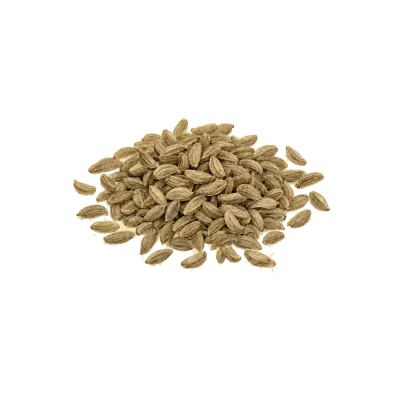
Small, grey-brown, slightly curved seeds, usually dry-fried to soften their coldness and crack their coats before decocting[1].
References
- Bensky, Clavey & Stöger, Chinese Herbal Medicine: Materia Medica, 3rd ed., Eastland Press, 2004. ↩
Under the modern lens
Chemists have catalogued some 209 distinct compounds in niú bàng zǐ. The ones their papers return to most often:
Constituent records from SymMap v2.0 and TCMSP, retrieved August 2026 and checked by hand. A list of what's inside is a map, not a promise — chemistry alone doesn't prove an effect.
Used in formulas
- 银翘散 Yin Qiao San Honeysuckle and Forsythia Powder Deputy — burdock seed: benefits the throat
 Reviewed 2026-08-26