
The Herb Cabinet 本草
荆芥 jīng jiè
Schizonepeta tenuifolia · schizonepeta spike
“A mint-family herb so even-tempered it works both sides of the street — warm formulas and cool ones alike hire it to open the door.” — Lao Xinglin
What the tradition says
Jing jie is the wind-expeller with no strong opinions about temperature: only slightly warm, it releases the exterior in cold formulas and — as in Yin Qiao San — keeps the surface open inside cooling ones, where its mildness keeps it from fighting the chiefs[1]. Beyond colds, it vents half-erupted rashes and relieves itching (a signature), and, charcoaled (jing jie tan), switches careers entirely to stop bleeding[1].
What the research says
The spike's essential oils (menthone relatives — it is mint family) show the expected anti-inflammatory and antihistamine-adjacent signals in laboratory models; clinical evidence is absent outside formula studies. Filed as a classical utility player.
Where to be careful
The standard disperser's fence: not for sweating from deficiency or fully erupted rashes[1]. Otherwise notably gentle — part of why every era's formularies kept it employed.
In the pharmacy
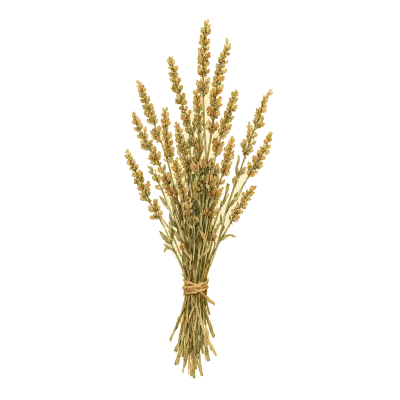
Slender dried flower spikes and stems with a soft minty-camphor nose. Used raw for dispersing, charcoal-fried for bleeding — same plant, opposite jobs[1].
References
- Bensky, Clavey & Stöger, Chinese Herbal Medicine: Materia Medica, 3rd ed., Eastland Press, 2004. ↩
Under the modern lens
Chemists have catalogued some 246 distinct compounds in jīng jiè. The ones their papers return to most often:
Constituent records from SymMap v2.0 and TCMSP, retrieved August 2026 and checked by hand. A list of what's inside is a map, not a promise — chemistry alone doesn't prove an effect.
Used in formulas
- 银翘散 Yin Qiao San Honeysuckle and Forsythia Powder Assistant — opens the surface without heat
 Reviewed 2026-08-26