
The Herb Cabinet 本草
小檗碱 xiǎo bò jiǎn
from Coptis, Phellodendron & Berberis species · berberine (alkaloid)
“Not a drawer in my cabinet but the yellow soul of three of them — the bitter alkaloid the internet discovered a few thousand years after we did, and promptly oversold.” — Lao Xinglin
A compound, not a herb
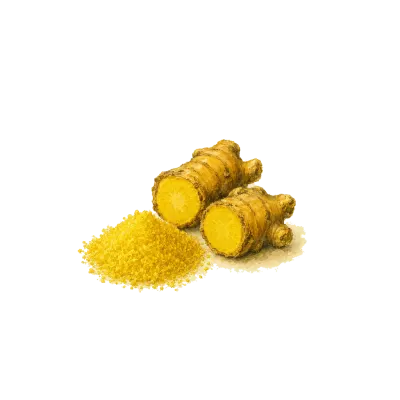
Berberine is the exception in this cabinet: not a plant but a molecule — the intensely bitter, intensely yellow alkaloid that gives huang lian its famous color and bite, and runs through phellodendron bark and barberry besides. The tradition never knew the word "berberine"; it knew the herbs, and used their yellow bitterness for damp-heat — the raging gut, the hot dysentery — for some eighteen centuries. The supplement aisle extracted the molecule and gave it a second career.
What the evidence shows
More than most supplements, less than the hype. Studies and meta-analyses suggest berberine may help blood sugar and cholesterol — but the studies are of limited quality, the effects may be small, and lifestyle change is still doing the heavy lifting[1]. The "nature's Ozempic" nickname is marketing: nothing in the berberine literature resembles GLP-1-drug weight results, a point the Consulting Room makes at length.
Where to be careful
This molecule behaves like a drug and must be respected as one[1]:
- Pregnancy and breastfeeding: no — infant jaundice risk.
- Immunosuppressants (tacrolimus, cyclosporine): documented interactions with kidney-toxicity risk.
- Diabetes drugs: additive effects need supervision.
- It interferes with the liver enzymes (CYP3A4 and others) that process a long list of medications — the grapefruit conversation, again.
- Expect digestive complaints at real doses; the bitterness is not shy inside you either.
In the pharmacy
Sold as capsules of yellow powder, typically 500 mg. If what you want is the tradition's use — the cooling of a burning gut — the tradition's form is huang lian in a prescribed formula, not a bulk molecule. If what you want is metabolic help, want it with your physician's knowledge. Either way, this drawer is labeled in the cabinet's plainest hand: bitter, powerful, not a toy.
References
- Memorial Sloan Kettering Cancer Center, About Herbs: "Berberine." https://www.mskcc.org/cancer-care/integrative-medicine/herbs/berberine ↩
 Reviewed 2026-08-26